Understanding Your Ford 4000's Starting System
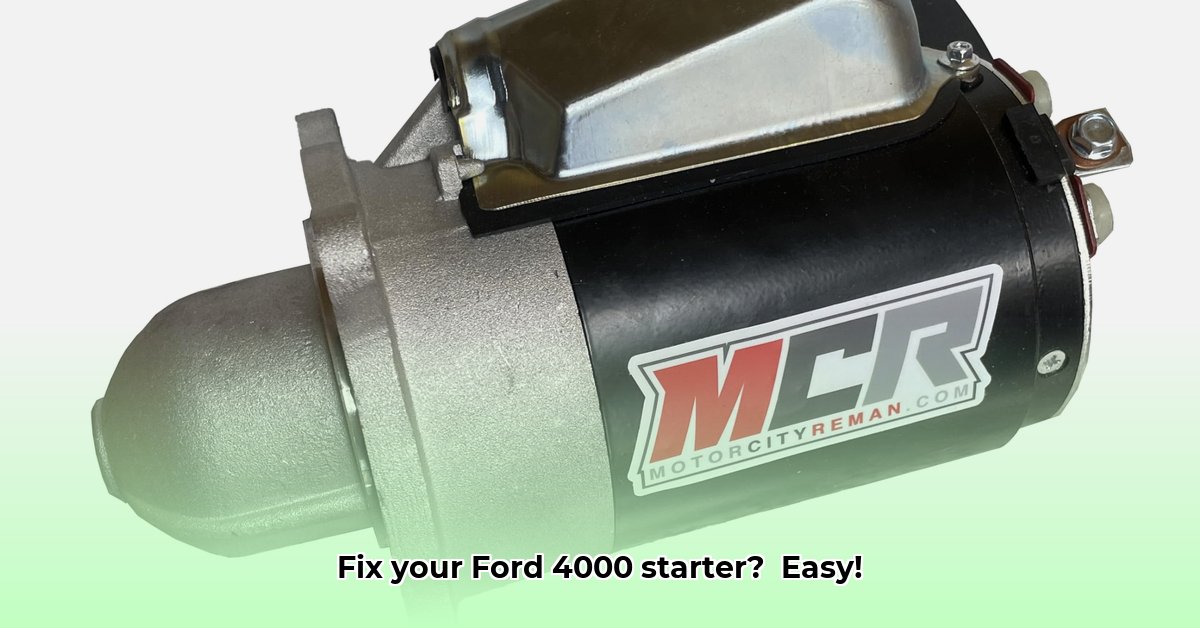
Before tackling repairs, let's understand the basics. Your Ford 4000's starter motor is the electric motor that initiates engine cranking. It's a vital component; a faulty starter means a non-functional tractor. This guide addresses common Ford 4000 starter problems, providing step-by-step solutions for both troubleshooting and repairs. For additional resources on Ford tractors, check out this helpful link.
Common Ford 4000 Tractor Starter Problems
Here are the most frequent issues:
No Crank (Engine Won't Turn Over): Complete silence when you turn the key. This could be a dead battery, a faulty starter motor, a problematic solenoid (the starter's electrical switch), or even issues with the ignition system.
Clicking Sound: A rapid clicking noise often indicates a low battery or a failing solenoid. A weak click suggests a low battery; a strong click might mean the solenoid is fine, placing the focus on the starter motor.
Slow Crank: Sluggish cranking may point to a weak battery, a struggling starter motor, or simply a need for starter maintenance.
Grinding Noise: This is a serious warning! A grinding sound means the starter isn't meshing properly with the flywheel, potentially damaging both. Address this immediately.
Complete Starter Failure: The starter is completely unresponsive. This usually suggests a significant internal starter motor problem requiring replacement.
Troubleshooting Your Ford 4000 Tractor Starter: A Step-by-Step Approach
Let's systematically diagnose the problem:
Step 1: Battery Check
- Use a multimeter (available at auto parts stores) to measure battery voltage. A fully charged battery should read approximately 12 volts. Lower voltage indicates a weak or dead battery. A simple fix, often overlooked!
Step 2: Cable Inspection
- Examine battery cables for corrosion, loose connections, or damage. Clean corroded terminals with a wire brush and tighten loose connections. Poor connections significantly impede power flow to the starter.
Step 3: Solenoid Test (Listening)
- With the key in the "start" position, listen carefully for the solenoid's characteristic "click". A faint click may indicate a weak battery, while no click suggests a solenoid, ignition switch, or related wiring problem.
Step 4: Starter Motor Examination (The Gentle Tap)
- If the solenoid clicks but the engine doesn't crank, carefully tap the starter motor with a hammer. Sometimes a stuck component will dislodge. However, repeated problems or no improvement suggest internal damage requiring replacement. (Safety Caution: Take extreme care when tapping)
Replacing Your Ford 4000 Tractor Starter: A Guided Procedure
If troubleshooting points to a faulty starter motor, replacement is necessary.
Step 1: Gather Tools and Parts
- Order a new starter motor compatible with your Ford 4000 model and year. Always verify part numbers!
- Gather tools: wrenches, sockets (correct sizes!), and potentially a battery disconnect tool.
Step 2: Disconnect Battery (Safety First!)
- Always disconnect the negative (-) battery terminal before any electrical work to prevent short circuits and injury.
Step 3: Remove Old Starter
- Locate the starter motor (typically on the engine side). Disconnect the wiring harness and carefully remove the mounting bolts. Note the assembly arrangement for easier reinstallation.
Step 4: Install New Starter
- Position the new starter motor, ensuring proper alignment. Securely fasten the mounting bolts. Double-check that all wiring connections are tight and secure.
Step 5: Reconnect Battery
- Reconnect the negative (-) battery terminal.
Step 6: Test
- Turn the key. If it starts smoothly, congratulations! If the problem persists, meticulously review each step.
Finding Replacement Parts
Many online retailers and agricultural equipment suppliers carry Ford 4000 parts. Always verify part compatibility before purchasing. Compare prices from multiple sources for best value.
Key Takeaways: Efficient Troubleshooting of Ford 4000 Starting Issues
- A systematic approach is crucial for efficient diagnosis of starting issues.
- Begin with simple checks (battery, connections) before moving to more complex components.
- Understanding the starting system's components (solenoid, Bendix) is essential.
- Note sounds – clicks, clunks, silence – for valuable clues.
- Regular maintenance reduces the likelihood of starter failures.
Disclaimer: Working on machinery involves inherent risks. If uncertain about any step, consult a qualified mechanic. Your safety is paramount.